Goat Hoof Care: A Routine That Prevents Limping and Rot
Goats are built for scrambling over rocks, not lounging on soft bedding. In barns and grassy paddocks their hooves out-grow natural wear, curl under, and trap muck. Once horn distorts, weight shifts to joints, tendons flare, and anaerobic bacteria slip into cracks. A short, repeatable hoof-care program keeps feet tight, goats lively, and vet bills thin.
Why Consistent Hoof Care Matters
-
Balanced weight = healthy joints. Level claws stop knee and shoulder strain.
-
Smooth horn blocks infection. A sealed surface denies hoof-rot bacteria a home.
-
Active goats browse and gain. Pain-free movement lifts milk yield and weight gain.
-
Five-minute trims beat one-hour fixes. Quick maintenance averts abscess surgery.
Timing & Tools in Real-World Conditions
Trim intervals shift with terrain and season. On rocky hillsides a hoof may stay tidy for eight weeks; on damp, clay soils it can overgrow in three. Rainy months swell horn faster, so plan an extra mid-cycle check. Replace a coarse disc on the Hoof Boss after roughly 90 goats; a fine disc often pushes past 130 before glazing. Keep a backup battery or cord reel at the stand—downtime invites shortcuts, and shortcuts cost soundness.
Early-Warning Signs You Shouldn’t Ignore
A single head-bob on hard ground, flaky frog tissue that smells sour, or white-line staining means trouble brewing well before an obvious limp. Catching it then is cheaper than feed lost to stalled growth later.
The 7-Step Goat Hoof-Care Routine
-
Watch their gait weekly. A sharp click on concrete or toes that splay mark early overgrowth.
-
Clean and inspect monthly. Secure the goat on a stanchion, pick debris, and brush the sole so hairline cracks stand out.
-
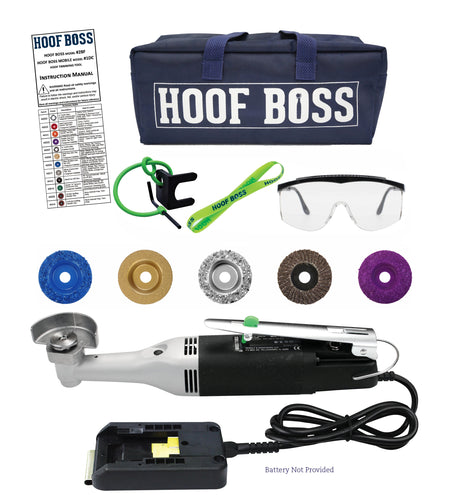
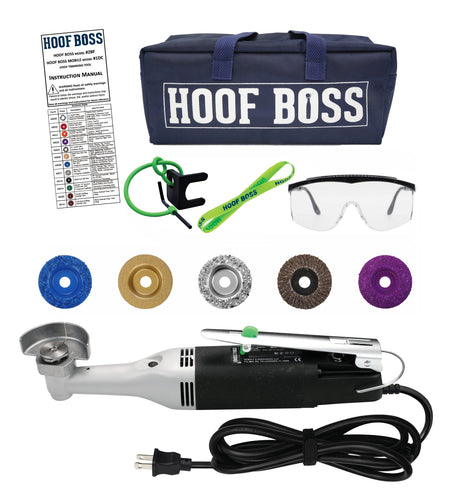
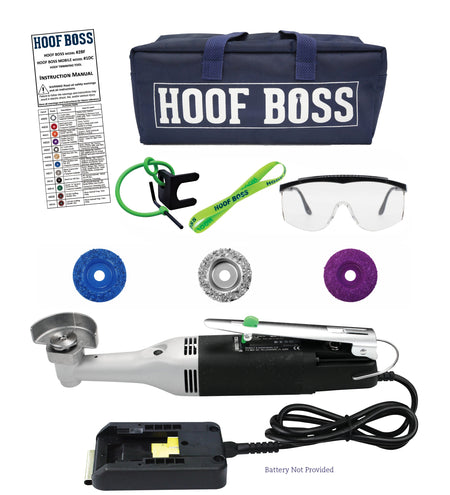
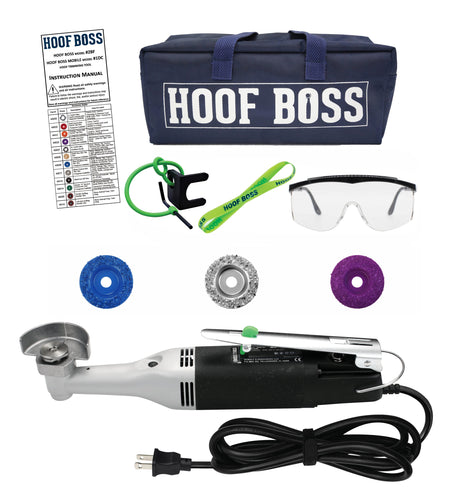
Trim with a Hoof Boss Electric Goat Trimmer. Start with 60-grit to shorten wall, shift to 120-grit to level, finish with 240-grit for a beveled edge—about two minutes per goat.
-
Disinfect immediately. Mist chlorhexidine onto fresh cuts; pack deeper splits with iodine gauze.
-
Upgrade footing. Keep pens dry, add gravel to gates, and slope concrete one percent for drainage.
-
Fine-tune minerals. Feed 20–30 ppm zinc and 10 ppm copper; trace elements harden new horn.
-
Log each trim. Note date, hoof score, and treatments—records flag goats that need a shorter cycle.
Beyond the Basics
Footbaths aren’t just for sheep: a monthly 10 % zinc sulfate dip cuts rot risk in wet climates. Quarantine new arrivals for a trim and inspection day one—imported pathogens travel fast. During heavy kidding, shorten trim sessions to three goats at a time to keep stress low for does close to term.
Follow this routine and center the work on the Hoof Boss Electric Goat Trimmer—fast disc swaps, palm-friendly grip, and a finish that stays clean longer. Consistency keeps hooves tidy, joints happy, and the whole herd springing from paddock to paddock.
Shop the Hoof Boss Goat Hoof-Care Collection and make hoof day the quickest task on the farm.